If you’ve spent more than a day browsing things to do in Bali, chances are you’ve stumbled across stunning sunrise photos taken from the top of a volcano. Two names come up again and again: Mount Batur and Mount Agung. Both are real, living volcanoes. Both offer incredible views. And both will ask something of you physically.
But they are not the same experience, and choosing the wrong one for your fitness level, timeline, or expectations can turn a dream trek into an unpleasant memory. So let’s break this down in a way that actually helps you decide.
A Quick Introduction to Both Volcanoes
Mount Batur sits in the Kintamani region of central Bali. It rises to 1,717 meters above sea level and is one of Bali’s most active volcanoes. It last erupted in 2000, and there are still areas of visible steam and geothermal activity near the summit. The scenery up there is genuinely dramatic: a crater lake, black lava fields, and on a clear morning, views stretching all the way to Mount Rinjani in Lombok.
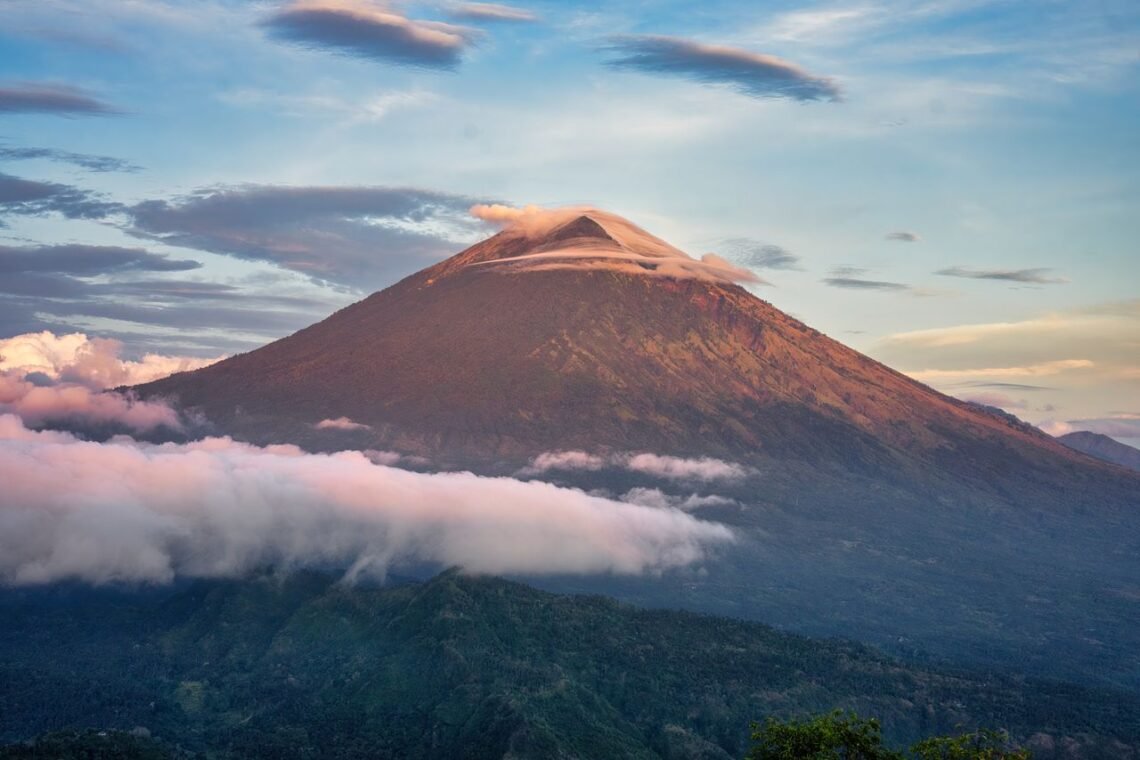
Mount Agung is a different beast entirely. Standing at 3,031 meters, it is Bali’s highest peak and holds deep spiritual significance for the Balinese people. It is considered the “navel of the world” in Balinese Hinduism, the home of the gods, and a sacred axis around which the whole island is oriented. The most recent major eruption was in 2017 to 2019, and the mountain is still seismically active. Trekking here carries real weight, both physically and culturally.
The Honest Difference in Difficulty
This is where most comparison guides get vague, so let’s be direct.
Mount Batur is genuinely accessible to most reasonably fit people. The standard trek takes around two hours to reach the summit, starting in the very early hours of the morning (usually around 2 to 3 AM) to catch sunrise. The trail is steep in parts, and you will be climbing over loose volcanic rock and ash, but there are no technical sections that require special equipment or mountaineering experience. A good pair of shoes, a headlamp, and a decent level of baseline fitness are enough to get most people to the top.
Mount Agung, on the other hand, demands real preparation. The most popular route, starting from Pura Besakih, takes anywhere from five to seven hours to summit, and around four to five hours to descend. You’re looking at a full day of physical effort, with significant elevation gain on steep, often loose terrain. The altitude adds another layer of challenge. Breathlessness and fatigue can set in much earlier than expected, especially if you’re not used to hiking at high altitude. This is not a walk you can casually decide to attempt the night before.
What the Experience Actually Feels Like
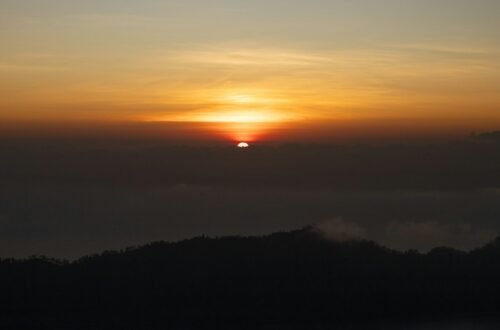
On Batur, you’ll likely be surrounded by other trekkers. It is a well-trodden route with a steady stream of guided groups moving up in the dark, headlamps bobbing like fireflies against the mountain. When you reach the top and the sky begins to glow in shades of orange and pink, the energy is celebratory. People are congratulating each other, taking photos, sharing boiled eggs that guides cook in the volcanic steam. It is social, it is warm, and it feels genuinely rewarding even without being particularly grueling.
Agung has a completely different atmosphere. The further you climb, the quieter it gets. There are fewer trekkers, the landscape becomes more raw and exposed, and at some point the effort becomes almost meditative. Many people describe reaching the Agung summit as one of the most emotionally charged experiences of their travels, not just because of the view, but because of what it took to get there. On a clear day, you can see much of Bali spread out below you, and on very rare mornings, even the shadow of the mountain itself cast across the clouds.
Guides: Both Are Required, and That’s a Good Thing
For Mount Batur, hiring a local guide is technically required by the local trekking association, though the rule is more loosely enforced than it once was. Practically speaking, going with a guide is still the smarter choice. They carry snacks, know the safest paths in the dark, and will often make the whole experience more enjoyable with their stories about the mountain.
For Mount Agung, a guide is not optional. Full stop. The terrain is serious, the path is not always clearly marked, and weather conditions can change quickly at altitude. Attempting Agung without an experienced local guide would be genuinely dangerous and is widely discouraged. Your guide will also help you understand the cultural protocols involved, including the appropriate behavior near and on the mountain. Respect for the spiritual nature of Agung is not just politeness; it is part of what makes the experience meaningful.
Timing, Season, and Conditions
Both treks are best attempted during Bali’s dry season, which runs roughly from April through October. The wet season, November through March, brings heavier rain, thicker cloud cover, and more slippery trails. Even in the dry season, conditions at the summit of Agung can be unpredictable, and summit views are never guaranteed.
For Batur, the schedule is fairly standardized. Most guides pick you up between midnight and 2 AM, you begin the ascent around 3 AM, and with luck you’re at the summit in time to watch the sky change color just before 6 AM. The whole thing, including descent and a leisurely breakfast, is typically wrapped up by mid-morning, leaving the rest of your day free.
For Agung, the schedule is longer and less predictable. Most treks begin even earlier, around midnight, and summit arrival depends heavily on the pace of your group. Allow the entire day and plan to rest the following day if possible.
So, Which One Should You Choose?
Here’s a simple way to think about it.
Choose Mount Batur if you want a memorable, achievable sunrise experience without needing to be in top physical shape. It suits first-time volcano trekkers, those with limited time in Bali, families with older children, and anyone who wants the magic of a volcanic sunrise without a full commitment of physical endurance. It is also perfect if you want a beautiful but relatively relaxed addition to a broader Bali itinerary.
Choose Mount Agung if you are a more experienced hiker, comfortable with long and demanding treks, and looking for something that genuinely tests you. It suits those who want more than just a view. People who are drawn to Agung tend to be looking for a deeper connection to Bali itself, something that goes beyond the surface and asks something real of them. If that resonates, and you are physically prepared for it, Agung will likely stay with you long after you’ve left the island.
A Few Practical Things to Know Before You Go
Regardless of which mountain you choose, there are some things that apply to both. Bring a proper headlamp with fresh batteries, not just your phone flashlight. Wear layers, because mornings at altitude in Bali can be surprisingly cold even in the dry season, especially when the wind picks up near the summit. Carry enough water, at least 1.5 liters per person, and eat a proper meal before you depart.
For Agung specifically, train in the weeks before your visit. Even regular walking won’t fully prepare you for five-plus hours of steep ascent. Spend time on stairs, do longer hikes if you can, and take the preparation seriously. Altitude sickness is real, and knowing the early signs such as headache, nausea, and disorientation is important.
And perhaps most importantly: go with a spirit of genuine respect. These are not theme park attractions. They are living, breathing parts of Bali’s landscape and culture, and the people who guide you up them have a relationship with these mountains that goes back generations.
Final Thought
There is no wrong choice here. Both mountains offer something genuinely special, and both will give you a memory of Bali that goes deeper than any beach club or rice terrace photo. The right question isn’t which one is better; it’s which one is right for you, right now.
Be honest with yourself about your fitness, your time, and what kind of experience you’re really after. Then lace up your shoes, trust your guide, and go meet the mountain.