Most people who visit Bali follow the same well-worn path: Seminyak for the beach clubs, Ubud for the rice terraces, Uluwatu for the cliffs. And honestly? Those places are popular for a reason. But if you have spent even a few days in Bali, you have probably felt it — that quiet pull toward something more real, more local, more Bali in the way the island used to feel before Instagram turned it into a backdrop.
The good news is that Bali still holds those places. You just have to know where to look.
These are not “secret” villages in the dramatic sense. Locals know them well. A handful of curious travelers have found their way there too. But they remain beautifully off the main radar, and visiting them feels less like tourism and more like being a welcomed guest in someone’s home.
Here are the villages worth adding to your Bali itinerary — the ones that will make you feel like you actually saw the island.
Penglipuran: The Village That Takes Cleanliness Seriously
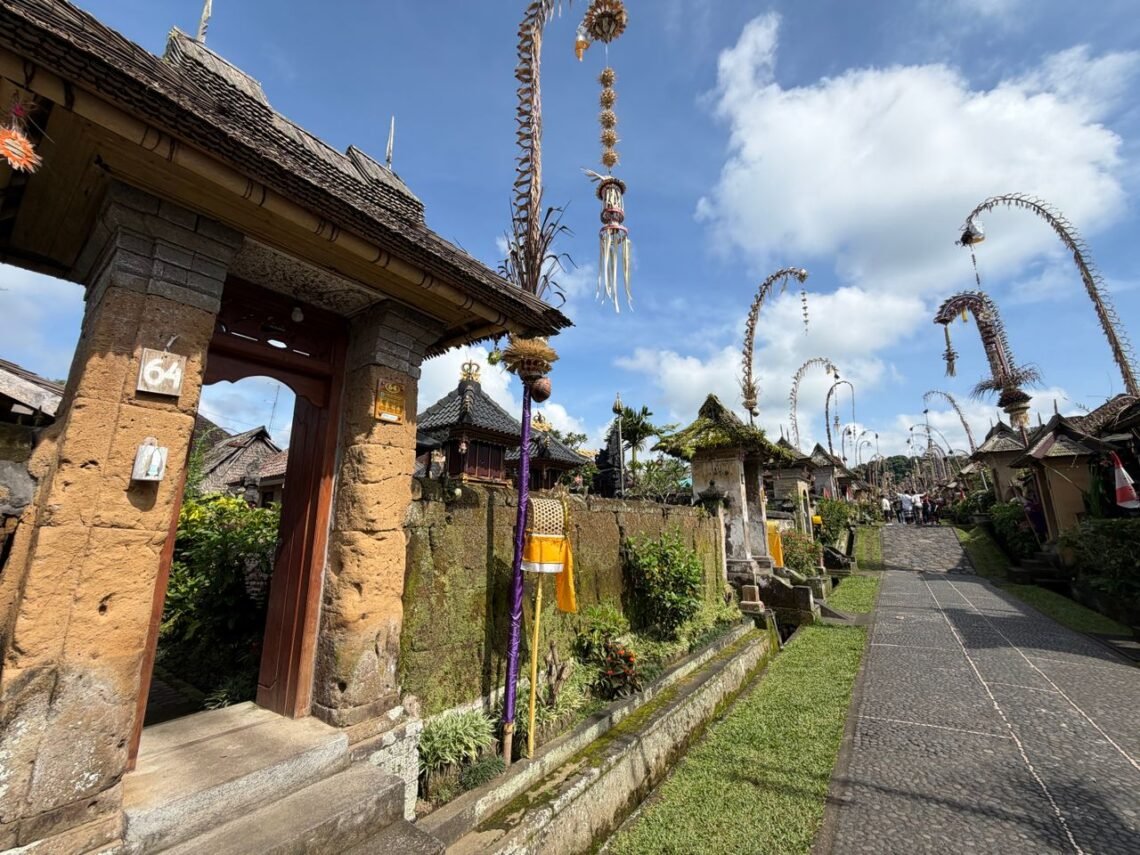
Tucked in the highlands of Bangli Regency, Penglipuran is often called one of the cleanest villages in the world — and once you set foot there, you understand why. The streets are swept with quiet discipline. The traditional Balinese architecture runs in perfect symmetry along a single main road. Bamboo groves frame the edges of the village like green curtains pulled open for you.
What makes Penglipuran worth visiting is not just how it looks, but how it functions. The community here still follows traditional adat (customary law), and the layout of the village itself reflects ancient spatial philosophy about harmony between humans, nature, and the divine. You can feel that intentionality just walking through it.
Motorbikes are not allowed inside. That alone makes the experience feel completely different from the rest of Bali. The silence is the kind that settles into your shoulders.
Come in the morning before tour groups arrive. Bring cash for the small entrance fee. And take your time.
Sidemen: The Valley That Feels Like Ubud, Twenty Years Ago
There is a running joke among long-term Bali travelers that Sidemen is what Ubud used to be before the yoga retreats and smoothie bowls took over. That is not entirely fair to Ubud, but it captures something true about Sidemen.
Located in East Bali, Sidemen sits in a lush valley where Mount Agung dominates the horizon on clear mornings. The rice fields here are genuinely gorgeous — layered, green, and quiet in a way that does not feel staged. Weavers in the village still practice traditional endek and songket weaving, and you can watch the process up close or even try it yourself.
The accommodation options are small and mostly family-run. The restaurants serve simple, honest Balinese food. There are no clubs, no overpriced cocktails, no influencer hotspots. Just cool mountain air, the sound of water flowing through irrigation channels, and the occasional sound of temple gamelan in the distance.
If you are the kind of traveler who needs at least one slow, unhurried day on a trip, Sidemen is where you spend it.
Tenganan Pegringsingan: A Village Outside of Time
Most travelers who make it to the East Bali town of Candidasa do not realize that just a few kilometers away, one of the oldest and most unique villages in all of Bali is quietly going about its ancient business.
Tenganan Pegringsingan is a Bali Aga village — meaning it predates the Majapahit Hindu influence that shaped much of Balinese culture. The community here follows its own set of customs, its own calendar, and its own rules about land ownership and marriage. The village land cannot be sold. Residents who marry outsiders must leave. It is a living, breathing community that has chosen to preserve itself on its own terms for centuries.
The village is also the only place in the world that produces geringsing double ikat fabric, a weaving technique so complex and time-consuming that a single cloth can take years to complete. You will find it for sale inside the village, and yes, it is expensive. It is also extraordinary.
Entrance is free, though a small donation is appreciated. Walk slowly. Look closely at the architecture, the offering shrines, the details. Tenganan rewards the patient visitor.
Munduk: The Cool Highland Escape Most People Drive Past
Munduk sits in the northern highlands of Bali, and most tourists pass through it on the way to or from Lovina Beach without stopping. That is a genuine shame, because Munduk deserves more than a glance through a car window.
The village sits at around 1,000 meters above sea level, which means the air is cool enough that you will actually want a light jacket in the evenings. The landscape is a mix of clove and coffee plantations, jungle waterfalls, and misty lake views. Hiking trails here are uncrowded and genuinely scenic — the kind that feel like a reward rather than an ordeal.
The local warung culture in Munduk is also worth mentioning. You can sit with a cup of locally grown coffee, looking out over a valley covered in cloud, and feel very far from the traffic of South Bali. A few small guesthouses have opened in recent years, most of them family-run, and staying overnight means waking up to a sunrise that is hard to describe without sounding like a brochure.
Just trust us on this one.
Trunyan: The Village With a Cemetery Unlike Any Other
Fair warning: Trunyan is not for everyone. But for the traveler who is genuinely curious about Balinese culture in all its complexity, it is unforgettable.
Trunyan sits on the eastern shore of Lake Batur and can only be reached by boat. Like Tenganan, it is a Bali Aga village with pre-Hindu roots. What makes it famous — or quietly notorious — is its burial practice. The deceased are not cremated here, as is tradition in most of Bali. They are placed in bamboo cages in the open air beneath a large taru menyan tree, whose fragrance is said to neutralize the smell of decomposition.
It is a confronting sight, but approached with respect, it is also a profound one. Death here is not hidden. It is part of the landscape, part of the village, part of life.
Hire a local boat from Kedisan or Toya Bungkah. Engage with the community respectfully. Do not photograph without asking.
A Note Before You Go
The villages on this list share something important: they are real communities, not tourist attractions. The people who live in them are going about their lives, honoring their customs, and sharing their home with visitors who bother to show up.
The best thing you can do as a visitor is arrive with patience, spend money locally, follow any rules or dress codes, and leave things exactly as you found them.
Bali has given the world so much beauty, culture, and warmth. These villages are part of that gift. They deserve more than a quick photo stop on the way to somewhere else.
Take your time. Go slowly. This is the Bali that stays with you.

