There is a particular kind of quiet you find walking through rice terraces in Bali. It is not silence exactly, since you can usually hear water moving through the irrigation channels, birds calling from the trees, and maybe a farmer calling out to a friend across the field. But it is a quiet that settles into you, slows your breathing, and makes you notice things you would normally walk past. Tegallalang, just north of Ubud, is where most visitors first experience this. It is also a good starting point for understanding why Bali’s rice terraces are worth more than a quick photo stop.
Why Tegallalang Comes First
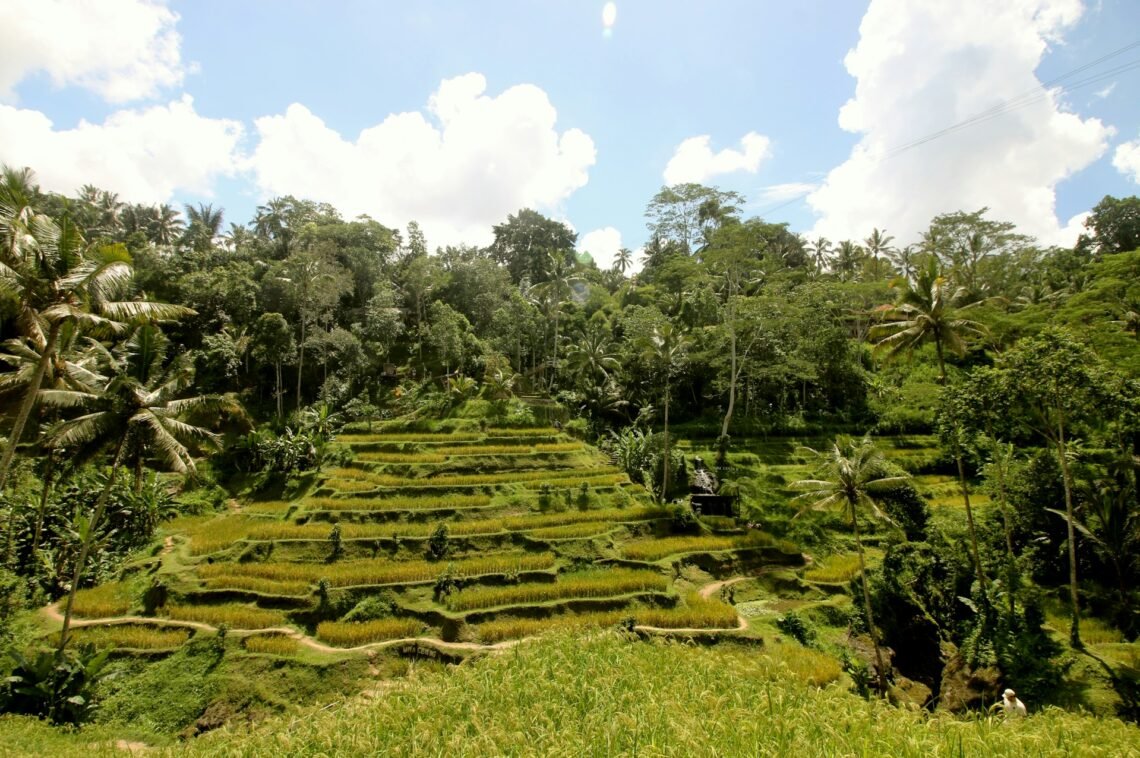
Tegallalang is famous, and for good reason. The terraces here step down the hillside in clean, curved layers, fed by a subak system of water channels that Balinese farmers have used for centuries. This is not just clever farming. Subak is a way of sharing water fairly between fields, guided by community agreement and temple ceremony as much as by engineering. UNESCO recognized this system as a cultural landscape, which tells you something about how deeply rice farming is woven into Balinese life.
Most people see Tegallalang from the main viewpoints along the road, where cafes and souvenir stalls line up to catch the view. That is a fine way to start, but it is only the surface. If you walk down into the terraces themselves, on the narrow dirt paths between the paddies, the place changes. You move past bamboo swings built for photos, sure, but also past small shrines, working farmers, ducks herded along flooded fields, and the kind of green that photographs never quite capture. Wear shoes you do not mind getting muddy, bring water, and go early if you want fewer crowds and softer light.
Walking the Trail Properly
The real reward of Tegallalang is the longer loop trail that many visitors skip. Instead of stopping at the first viewpoint, you can follow paths that wind further into the valley, cross small bridges over irrigation streams, and climb back up through quieter terraces where almost no one stops. This walk usually takes one to two hours depending on your pace, and it is not technically difficult, though some sections are steep or slippery after rain. Along the way you will likely meet local farmers tending their fields, and many are happy to explain a little about the rice cycle if you show genuine interest. A small entrance donation is normal at certain points, and it goes toward maintaining the paths and supporting the farming families who keep the land alive.
What makes this walk worth the effort is the change in pace it asks of you. Bali moves fast in many of its tourist areas, but rice terraces force you to slow down. The paths are narrow, the footing requires attention, and the view keeps shifting as you move, revealing new angles of green that you could not see from the road. It is the kind of walk where conversation naturally quiets down, not because anything is wrong, but because there is simply a lot to take in.
Beyond Tegallalang: Where the Trail Continues
Tegallalang is often the first rice terrace people visit, but it should not be the last. A short drive further north or west opens up terraces that are larger, quieter, and in some ways more impressive.
Jatiluwih, about an hour and a half from Ubud, is the largest and arguably most dramatic rice terrace system in Bali. The scale here is different. Instead of one hillside, you are looking at terraces that stretch across an entire valley, climbing toward Mount Batukaru in the distance. Jatiluwih is also a UNESCO World Heritage Site, and because it sees fewer visitors than Tegallalang, the walking trails feel more peaceful. There are several marked routes of different lengths, so you can choose a short walk along the main road view or a longer loop that takes you deep into the fields.
Sidemen, in east Bali, offers something gentler again. The terraces here are spread across a wide valley with Mount Agung often visible in the background on clear days. Sidemen has fewer organized trails and fewer crowds, which means your walk feels more like wandering through someone’s actual farmland, because in many ways, that is exactly what it is. Local guesthouses in the area can usually point you toward small paths that loop through the fields, past coffee plantations and small village temples.
If you have time for one more stop, the area around Pupuan in northwest Bali rewards travelers willing to go further off the usual route. The terraces here mix with clove and coffee plantations, and the roads wind through hills that few tourists bother to explore. It is not set up for easy walking the way Tegallalang or Jatiluwih are, but that is part of its appeal. You are simply in the countryside, and the rice fields are part of daily life rather than a tourist attraction.
A Few Honest Tips
Rice terrace walks are easy to romanticize, so it helps to go in with realistic expectations. The paths can be muddy, especially during the wet season between November and March, so proper shoes matter more than stylish ones. Mornings are usually cooler and quieter, which makes them the best time to walk if you want to avoid both heat and crowds. Bring cash for small entrance fees or donations, since many of these trails are maintained by local farming communities rather than government bodies. And try to remember that these terraces are working farms, not theme parks. Staying on marked paths, not disturbing the crops, and being respectful around farmers goes a long way toward keeping these places healthy for the people who depend on them.
Why It Is Worth the Walk
There is a reason rice terraces show up on almost every list of things to do in Bali, and it is not just because they photograph well. Walking through them gives you a direct look at a way of life that has shaped the island for generations, built on cooperation, water, and patience. Tegallalang is a good place to begin that understanding, but letting the trail lead you further, toward Jatiluwih, Sidemen, or even Pupuan, gives you a fuller picture of what these landscapes mean to the people who tend them every day. Slow down, walk a little further than the first viewpoint, and you will likely come away with more than a good photo. You will come away with a better sense of Bali itself.