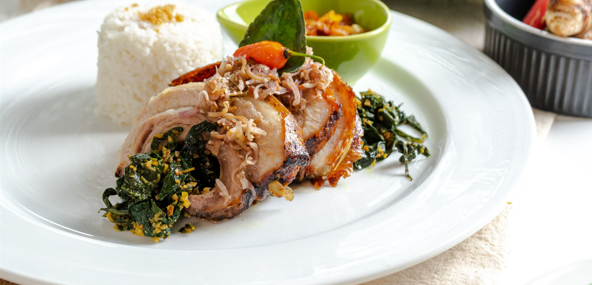
If you have spent any time in Bali, you have probably heard whispers about babi guling long before you tasted it. It is roasted pork, but calling it “roasted pork” barely does it justice. Real babi guling is a slow labor of love, stuffed with turmeric, galangal, lemongrass, and a dozen other spices that Balinese cooks blend by hand, then rotated over an open fire for hours until the skin turns golden and impossibly crisp. It is a dish tied to ceremony, family, and centuries of tradition, which is exactly why finding the authentic version matters so much.
In a place as popular as Bali, it is easy to end up at a tourist friendly spot that serves a version of babi guling designed for convenience rather than character. There is nothing wrong with convenience, but if you want the real thing, the kind locals grew up eating at temple ceremonies and family gatherings, you need to know where to look. This guide will walk you through it, warung by warung, region by region.
What Makes Babi Guling “Authentic” in the First Place
Before we get to specific places, it helps to know what you are actually looking for. Authentic babi guling starts with base genep, a rich spice paste made from more than a dozen ingredients including turmeric, ginger, galangal, garlic, shallots, chili, and candlenut. This paste is rubbed generously inside the pig before it is skewered and roasted slowly over a wood fire, often for four to six hours. The slow roasting is what gives the meat its tenderness and the skin its signature crackle.
A truly authentic version is usually served with a plate of rice, crisp pork skin, tender meat, lawar (a mix of vegetables, coconut, and minced meat), and a spoonful of rich, spicy sauce. The whole plate should smell like a garden of spices, not just salt and oil. If a warung’s babi guling tastes flat or overly sweet, chances are it has been softened for a broader audience rather than staying true to the original recipe.
Ubud: Where Babi Guling Gained Its Fame
Ubud is often the first place people think of when it comes to babi guling, largely thanks to Ibu Oka, a warung that has been serving this dish since the 1970s. Ibu Oka became so well known that international food shows have featured it, and on any given day you will find both locals and travelers lining up for a plate. The meat is tender, the skin is crisp, and the seasoning carries that unmistakable depth you only get from a well guarded family recipe. Yes, it can get busy, especially around lunchtime, but the quality has remained consistent for decades, which says a lot in a city that changes as quickly as Ubud does.
Beyond Ibu Oka, Ubud has several smaller warungs tucked into side streets that serve equally good versions without the crowds. Asking a local driver or a hotel staff member for their personal favorite often leads to some of the best discoveries, since these are the places that do not rely on tourist traffic to survive. They cook for their neighbors first, and visitors second, which usually means the spice blend has never been dialed back.
Gianyar: The Birthplace Many Locals Swear By
If Ubud is where babi guling became famous, Gianyar is often considered where it truly comes from. This regency has long been known as the heartland of Balinese roast pork, and the Gianyar night market is a wonderful place to taste it exactly how generations of Balinese families have. Vendors here have often inherited their recipes from parents or grandparents, and the friendly competition between stalls keeps everyone sharpening their craft. The pork tends to be less adjusted for foreign palates, so expect bolder spice and a more traditional presentation, right down to the banana leaf it is served on.
Pak Malen, one of the well known names from this area, has built a loyal following for good reason. The meat here carries a rustic, home cooked quality that reminds you this dish was never meant to be fancy. It was meant to be shared, usually during a ceremony or family celebration, which is part of what makes eating it feel special even as a visitor passing through.
Denpasar and Beyond: Everyday Babi Guling
While Ubud and Gianyar tend to get the spotlight, Denpasar and its surrounding areas are full of unassuming warungs that serve babi guling as a daily staple rather than a tourist attraction. These are often the places locals visit on their lunch break, and the lack of pretense usually means the recipe has not been altered to suit outside expectations. If you find yourself near Denpasar, keep an eye out for small roadside stalls with a queue of local motorbikes parked outside. That queue, more than any review online, is usually the best sign you are in the right place.
Some of the most memorable meals come from these overlooked corners, where the cook has been perfecting the same recipe for thirty years and has never once thought to put it on a menu written in English.
How to Spot the Real Deal Wherever You Are
No matter where you end up, there are a few signs that point to authenticity. Look for a warung where the pig is roasted on site, since the aroma of wood smoke and spice is hard to fake. Notice whether the menu is short, often limited to just babi guling and maybe a few side dishes, because places trying to please everyone rarely specialize in anything. Pay attention to who is eating there. If you see Balinese families, especially around temple days or ceremony mornings, you are likely in the right place. And do not be afraid to ask your driver, your homestay host, or even a stranger at the next table where they usually eat. Balinese people take real pride in this dish, and most are happy to point you toward their favorite spot, sometimes even their own family’s warung.
Timing matters too. Babi guling is traditionally a morning to early afternoon dish, since it is meant to be eaten fresh while the skin is still crackling. Many of the best warungs sell out by two in the afternoon, so if you are chasing the real experience, it pays to plan an early lunch rather than a late one.
A Dish Worth Seeking Out
Babi guling is not just food, it is a piece of Balinese culture served on a banana leaf. Taking the time to find an authentic version, whether at a famous warung in Ubud, a bustling market stall in Gianyar, or a quiet roadside spot near Denpasar, means tasting Bali the way generations of locals have. It might take a little more effort than ordering from the nearest tourist menu, but the reward, a plate that is smoky, spicy, crisp, and deeply comforting, is well worth the search.
So the next time someone tells you they have found “the best babi guling in Bali,” ask a few questions before you decide to follow the recommendation. Where do the locals eat. How is the pig roasted. What time do they usually sell out. The answers will tell you almost everything you need to know, and they will lead you straight to a plate worth remembering long after your trip is over.

