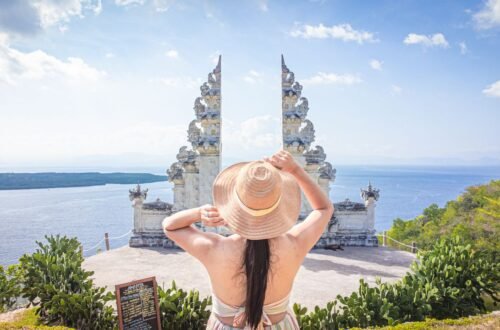
Most people who visit Bali never make it past Seminyak, Ubud, or Canggu. That is completely understandable. Those places are incredible. But if you are the kind of traveler who quietly craves something more raw, more real, and a little less crowded, then Amed is calling your name.
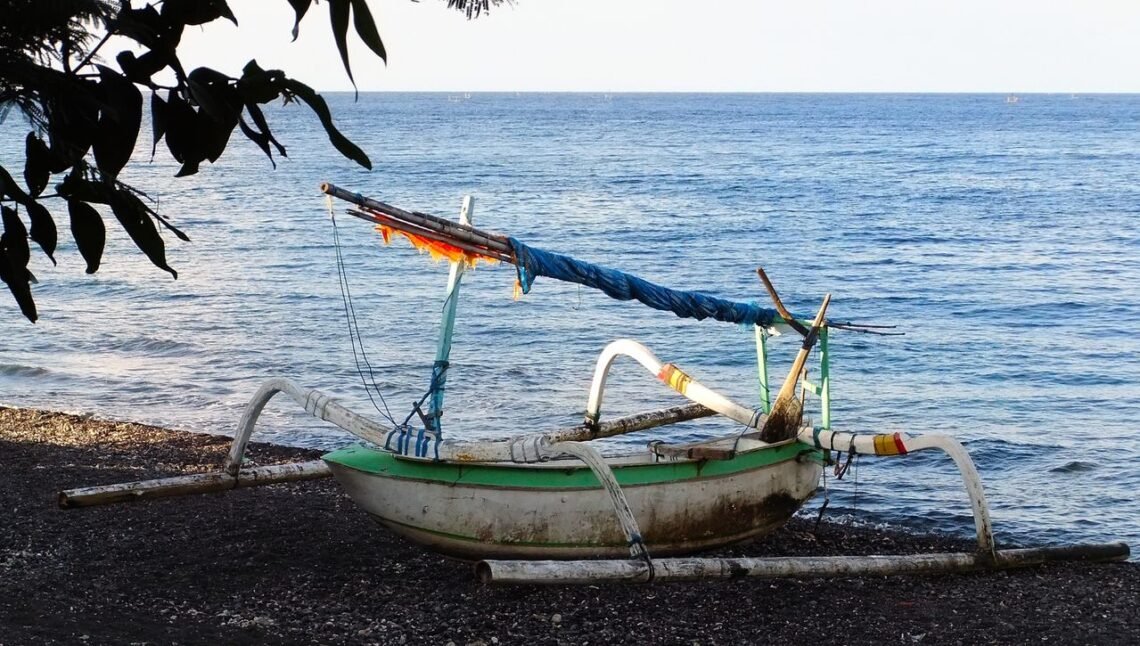
Tucked along Bali’s northeastern coast, Amed is not a single village but a string of traditional fishing hamlets stretching about 10 kilometers along the shoreline. The pace here is different. The air smells like salt and sea. Fishermen still head out before dawn in their colorful jukung boats, and the beaches are blanketed with dark volcanic sand that shimmers under the morning light. This is Bali before the world caught on.
Getting to Amed
Amed sits roughly 95 kilometers from Ngurah Rai International Airport, which translates to about two and a half to three hours by car depending on traffic. The drive itself is part of the experience. You will pass through Ubud’s green rice terraces, wind through the highlands, and eventually descend toward the coast with Mount Agung rising majestically on your left. It is a genuinely beautiful journey.
The most practical option is to hire a private driver, which typically costs between 350,000 and 500,000 IDR from the Kuta or Seminyak area. You can also rent a scooter from Ubud or Karangasem if you are comfortable riding on winding mountain roads, which many travelers genuinely love. There is no direct shuttle bus to Amed, but several guesthouses and tour operators offer shared transfer services if you book in advance.
The Black Sand Beaches
Let’s be honest: if you are expecting powdery white sand and turquoise resort pools, Amed will surprise you. The beaches here are composed of dark volcanic sand, a byproduct of Mount Agung’s ancient eruptions. They are dramatic, a little otherworldly, and quietly beautiful in a way that grows on you fast.
Jemeluk Beach is the most popular stretch and the heart of Amed’s social scene. It is calm, protected by a natural bay, and surrounded by warung restaurants where you can eat fresh grilled fish while watching local kids play in the shallows. Further along the coast, Lipah Beach is quieter and feels more secluded, while Banyuning and Aas offer an even more local atmosphere with fewer tourists and more genuine village life happening right at the shoreline.
The water in Amed is remarkably clear. Because the area sits in a rain shadow, it receives far less rain than the rest of Bali, which means the sea stays calm and visibility stays sharp throughout most of the year. Even if you never strap on a tank, just snorkeling here along the coral gardens is a proper treat.
Waking Up for the Sunrise
People who have watched the sunrise in Amed tend to talk about it differently than other sunrises. There is something about the combination of the dark beach, the still water, and Mount Agung’s silhouette rising behind the fishing boats that makes it genuinely affecting. Set your alarm for 5:30 AM. Grab a coffee from your guesthouse terrace or walk straight down to the beach. What happens in the next hour will probably be the most peaceful thirty minutes of your entire Bali trip.
The sky over the Lombok Strait turns a deep orange, and the light catches the surface of the water in a way that makes the black sand look almost golden. The fishermen who went out before midnight start coming back in, dragging their boats up the beach. There is no crowd, no noise, and no countdown. Just the morning doing its thing.
If you want a slightly elevated view, the hill above Jemeluk Bay offers a panoramic viewpoint that many photographers use for golden hour shots. It is a short and easy walk, and the view is worth every step.
Diving and Snorkeling in Amed
This is where Amed truly earns its reputation. The diving here is some of the best in Southeast Asia, which is saying a lot when you consider how competitive that field is. The underwater landscape is rich with hard and soft corals, and the marine life ranges from tiny nudibranchs to hawksbill sea turtles to occasional reef sharks passing through.
For snorkelers, the House Reef at Jemeluk Bay is the go-to spot. The reef starts just a few meters from shore and extends into a colorful wall packed with parrotfish, moray eels, and swaying sea fans. Visibility is often between 15 and 25 meters, and the gentle current makes it comfortable for all experience levels.
For divers, the Japanese Shipwreck near Amed village is a standout experience. This small patrol vessel sank during World War II and now sits at around 28 meters depth, almost completely encrusted in coral and home to a rotating cast of marine residents. It is accessible to Open Water certified divers and makes for a genuinely memorable dive.
Many visitors also combine a trip to Amed with a morning dive at the USAT Liberty wreck in nearby Tulamben, which is only 20 minutes up the road. The Liberty is one of the most famous wreck dives in the world, sitting right at the shoreline and accessible from depths of just 5 meters all the way down to around 30 meters. Diving both the Amed Japanese wreck and the Liberty in a single day is very doable and very satisfying.
Several reputable dive operators are based in Amed, including Eco Dive Bali, Amed Divers, and Oceans 5. Most offer PADI courses, fun dives, and snorkeling trips. Expect to pay around 450,000 to 600,000 IDR per dive including equipment rental.
Where to Stay
Amed has accommodation for nearly every budget. The vibe here leans toward small guesthouses, eco-lodges, and boutique bungalows rather than large resorts, which is actually one of the things that makes it special. Waking up in a traditional Balinese bale just a minute’s walk from the beach, with Mount Agung framed in your window, is genuinely hard to beat.
For budget travelers, there are many clean and comfortable guesthouses in the 150,000 to 350,000 IDR range per night. Mid-range options with private pools and oceanfront terraces typically run between 600,000 and 1,200,000 IDR. If you are looking for something more special, a handful of boutique properties in Amed and Lipah offer stylish rooms with stunning views and excellent service without the mega-resort price tag.
Best Time to Visit
Amed’s dry season runs from April through October, and this is when the weather is at its most reliable. Visibility underwater is at its peak, the skies are clear, and the sunrises are consistently stunning. That said, because Amed sits in a rain shadow, even the wet season months from November through March are far drier here than in Seminyak or Ubud. Many divers actually prefer visiting in the shoulder months of April and October when the crowds are thinner and the conditions are still excellent.
A Few Things Worth Knowing
Amed has limited ATMs, so bring enough cash before you arrive. The two machines in the main village area do run out on busy weekends. Most restaurants and guesthouses do not accept credit cards, though this is slowly changing.
The roads along the coast are narrow and sometimes steep, especially between the main Amed stretch and the villages further east toward Aas. If you are renting a scooter, ride carefully and keep your speed sensible. The views are distracting in the best possible way.
Finally, take time to eat at the local warungs. A plate of nasi campur, fresh grilled snapper, or a bowl of Balinese lawar with rice will cost you almost nothing and taste like everything. The food culture in Amed is simple, honest, and genuinely delicious.
Why Amed Stays With You
Amed does not try hard to impress you. There are no flashy beach clubs, no rooftop bars with Instagram lighting, and no DJ sets that go until 4 AM. What Amed offers instead is something a lot harder to manufacture: a sense of place. A feeling that the world is still big and mostly quiet, that the sea is worth paying attention to, and that a sunrise watched in stillness is worth more than most things you can book online.
If you give it two or three nights, Amed will earn a permanent spot in your travel memory. It is the kind of place you tell people about quietly, hoping they will go, but also hoping it stays exactly as it is.