If you have been to Bali more than once, you already know the feeling. You land with a picture in your head , terraced rice fields, the smell of incense, a morning that moves slowly , and then you walk into Canggu at 9am and it looks like Shoreditch with a motorbike problem. Or you drive into Ubud on a Saturday and spend forty minutes stuck behind a convoy of tourist vans near the Monkey Forest. The Bali of your imagination is still there. You just have to know where to look.
That is exactly why Sidemen is starting to appear in more and more conversations among seasoned Bali travelers. Not the loud, Instagram-first crowd. The quieter ones , the ones who come back every year, who know which warung to trust, and who are always slightly protective of their favorite corners of this island. They have found something worth protecting in Sidemen, and slowly, the word is getting out.
So, Where Exactly Is Sidemen?
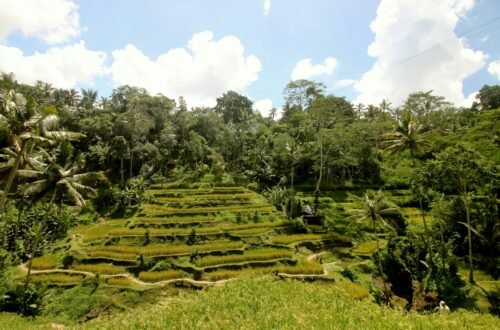
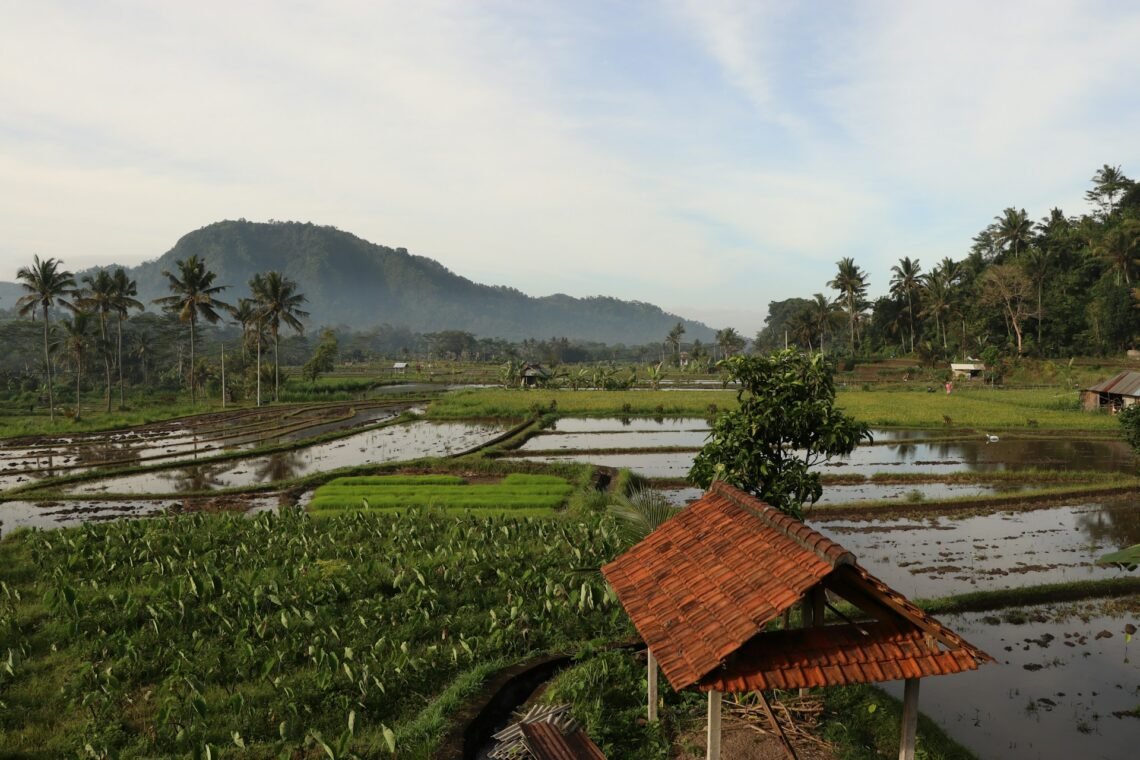
Sidemen sits in the eastern part of Bali, tucked inside Karangasem Regency, about an hour and a half drive from Seminyak and roughly an hour from Ubud depending on traffic. It is a valley village, surrounded by terraced rice fields that climb up the hillsides in long, curving rows. Behind everything, almost always visible on a clear morning, is Mount Agung , Bali’s highest and most sacred volcano. The mountain does not just decorate the landscape here. It dominates it. Waking up to that view, with mist sitting in the valley below and the sound of water moving through the irrigation channels, is the kind of experience that makes you rethink your original plan of staying in a rooftop villa in Seminyak.
The village itself is small and genuinely lived-in. There are local families going about their days, ceremonies happening in the banjar, schoolchildren on scooters, and older women weaving traditional Balinese songket cloth in open-air workshops. The infrastructure is simple but perfectly comfortable. You are not roughing it here. You are just choosing a different version of Bali.
Why People Are Comparing It to Old Ubud
Anyone who visited Ubud ten or fifteen years ago will tell you it was a completely different place. A town where artists actually lived and worked, where you could walk from your guesthouse to a rice field in five minutes, where the loudest sound at night was a gamelan rehearsal in the distance. That Ubud still exists in fragments, but it is surrounded now by juice bars, cooking class signboards, and accommodation that books out months in advance.
Sidemen has the soul that Ubud used to have, without the infrastructure that changes things. The rice terraces are not just scenic backdrops for photos. They are working fields that local farmers tend every single day. The weaving tradition here, known as songket, is one of the most refined in all of Bali, and you can sit with a local weaver and watch the whole process unfold , the threading, the shuttle movement, the slow emergence of gold-threaded pattern , without it feeling like a performance for tourists. It is just their craft and their livelihood, and they are generous enough to let you witness it.
The accommodation scene is tasteful rather than overbuilt. There are a handful of genuinely beautiful small resorts and guesthouses, most of them with rice field or mountain views, run either by local families or by people who moved here specifically because they did not want to build the next Seminyak. Prices are still reasonable by Bali standards, and the ratio of experience to cost feels almost unfair compared to what you would spend further west.
What There Is to Do (Without Filling Every Hour)
Part of what makes Sidemen so good is that it does not try to entertain you. There is no programmed fun, no curated nightlife, no rooftop DJ sets. What it offers instead is space and slowness, which turns out to be exactly what a lot of travelers are craving right now.
Trekking to or around Mount Agung is the most ambitious option, and it is genuinely rewarding for those willing to start in the middle of the night to catch the summit sunrise. Less intense but equally beautiful is the valley walk that winds through the rice terraces and small villages along the Unda River. It takes a few hours, involves no special gear, and delivers the kind of scenery that used to require a National Geographic subscription to see.
Cycling through the surrounding villages is another way to cover ground at a pace that lets you actually take things in. And if you want to go deeper into local culture, a traditional Balinese cooking class with a local family , followed by eating everything you just made together , is one of the most genuinely connective experiences available anywhere on the island.
For those who want nothing more than a book, a good view, and an afternoon that moves at its own pace, Sidemen will not disappoint you either.
Who Should Make the Trip
Sidemen is not for everyone, and that is part of its charm. If your ideal Bali holiday involves beach clubs, sunrise yoga classes with thirty other people, and a reliable espresso within walking distance, you will probably be happier elsewhere. There is no judgment in that. Bali is big enough to be different things to different people.
But if you are someone who has visited Bali before and left feeling like something was just out of reach, or if you are coming for the first time and already sense that the brochure version of the island might not be what you are really looking for, then Sidemen might be the place that finally makes the island click for you. It is the Bali you keep hearing about from people who seem to have a relationship with the island that goes beyond a two-week holiday.
Go Before the Crowd Figures It Out
There is always a version of this conversation that sounds a bit precious , the traveler who wants to keep a place a secret so it stays unspoiled. That is not quite what this is. Sidemen deserves visitors. The local economy benefits from thoughtful tourism, and the community has clearly thought carefully about how to welcome guests without losing what makes the village worth visiting in the first place.
What this is, really, is an honest observation: the window before a place changes is shorter than it used to be. The combination of social media, travel content, and post-pandemic wanderlust means that a village can go from quietly beautiful to overwhelmed in the space of a few seasons. Ubud is the proof of that.
Sidemen is at the beginning of its story with the outside world, not in the middle of it. The roads are still quiet in the morning. The warung owners still remember your face from yesterday. The rice fields still belong to the farmers, not to the photographers. If any of that sounds like what you have been looking for in Bali, now is a genuinely good time to go.
The crowds will catch up eventually. They always do. But right now, Sidemen is still a place where you can arrive, exhale, and remember what travel is actually supposed to feel like.