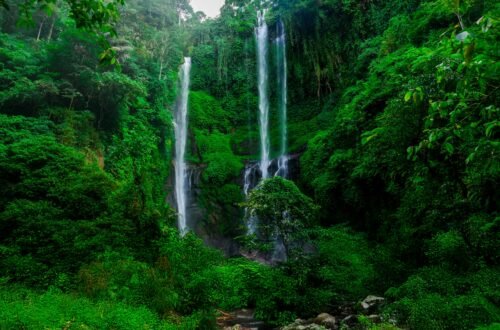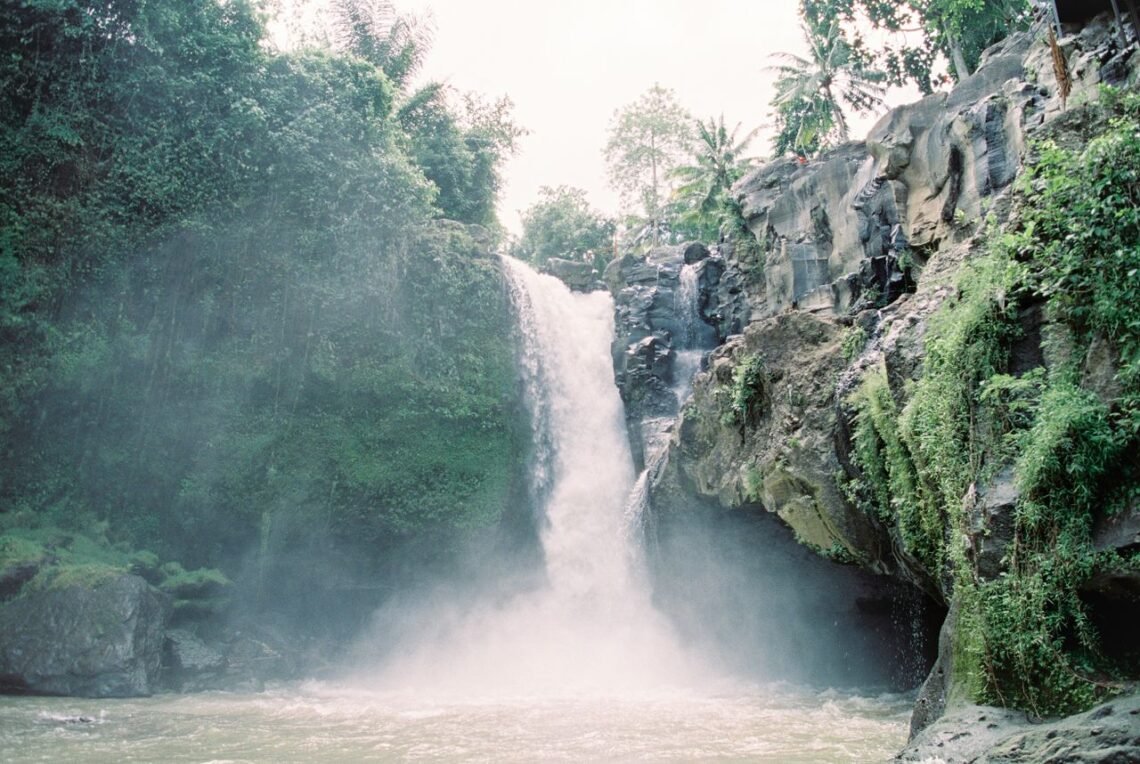
Most people who visit Bali leave with a photo at Tegenungan. Some make the trek to Sekumpul. And both are genuinely beautiful. But if you’ve spent any time on this island, you probably sense that there’s more , something quieter, wilder, and a little harder to find. That feeling is right.
Bali has over fifty waterfalls scattered across its volcanic highlands. The ones that make the headlines are wonderful, but they also come with tour buses, timed photo queues, and the kind of noise that makes it hard to actually feel where you are. The waterfalls beyond those famous names? They feel like a different island entirely.
This guide is for the traveler who wants to go a little further. Not just geographically, but in experience.
Tukad Cepung: Where Light Becomes Part of the Show
About an hour from Ubud, tucked inside a narrow canyon near Bangli, Tukad Cepung is one of those places that genuinely earns the word “magical” , and that word gets thrown around too loosely in Bali.
The waterfall flows through a rocky canyon, and what makes it truly special is the ethereal effect of sunlight filtering through the canyon walls, casting a mystical glow over the entire space. When you arrive between 9 and 11 in the morning on a clear day, the water falls through a gap in a cave ceiling, creating shafts of light that cut through the mist , and the whole cave fills with golden light.
Getting there involves wading through shallow water, navigating a narrow canyon, and climbing over some rocks. It is not difficult, but it asks something of you. That’s part of why it feels so rewarding. The trail from the ticket office down to the falls takes about 10 to 15 minutes, with concrete stairs providing relatively easy access.
Come early, wear shoes you don’t mind getting wet, and give yourself time to just stand there. The light moves. The mist shifts. It is the kind of place where you stop thinking about your next stop.
Tibumana: Simple, Honest, and Completely Underrated
Tibumana doesn’t try to impress you. It just does.
The waterfall stands around 20 meters in height and falls into a protected, shallow pool. The access road is reasonably well sign-posted and passes through beautiful rice fields, with concrete stairs recently upgraded to make the descent into the gorge a relatively easy walk.
What Tibumana offers is something rarer than drama: peace. It sits in a green gorge near the Susut area in Bangli, and most days you’ll find only a handful of other visitors. The water is clean and cool. The surroundings are lush without being overwhelming. After a week of Bali’s more crowded attractions, a morning here feels genuinely restorative.
After visiting Tibumana, many travelers head north to the Banyumala Twin Waterfalls, known for their lush jungle setting and refreshing natural pool. The two can be combined easily into a single day, which makes the journey north worthwhile even if your time is limited.
Nungnung: For the Ones Who Earn Their Waterfall
If you want raw Bali, Nungnung is it.
Situated in the heart of Bali, about an hour from Ubud, a descent of 500 steps awaits from the parking area, leading to the waterfall’s base. The trek might seem daunting, but the sight of the 50-meter waterfall is worth every step.
Nungnung is not subtle. It is powerful, loud, and surrounded by untouched jungle in a way that makes you feel properly far from the world. The mist reaches you long before you see the falls. By the time you’re standing at the base, you’re soaked, slightly breathless, and completely convinced it was worth it.
Bali has over fifty waterfalls scattered across its volcanic highlands, but most visitors only see one or two. The island’s most spectacular falls are tucked into jungle valleys in the north and east, where roads narrow, tourist buses disappear, and the landscape feels like a different world entirely. Nungnung is a perfect example of this. Bring water, wear proper footwear, and mentally prepare for the climb back up. It will be the highlight of many people’s trip.
Banyumala Twin Waterfalls: Twin Cascades and Clear, Cold Water
Up in the north near Munduk, Banyumala sits in a quiet village on the crater rim road , and it is genuinely off the tourist trail in a way that most “off the tourist trail” recommendations are not.
Also known as Banyumala Twin Waterfall, the two separate waterfalls cascade down from a height of 30 meters. The water is crystal clear, making it an ideal spot for swimming and soaking in the natural surroundings. The jungle setting feels dense and untouched, and on a quiet morning you might have the pool almost entirely to yourself.
It is located to the north of Lake Buyan on the crater rim road between Munduk and the main highway from Singaraja to Denpasar, and it is not easy to find , so be on the lookout for a faded sign directing you down a small village road that leads about 3km to the carpark.
That slight difficulty in finding it is, honestly, a feature. It keeps things quiet. And quiet is what makes Banyumala so worth the drive from the south.
Leke Leke: Bamboo Bridges and Jungle Calm
Leke Leke sits roughly an hour from both Canggu and Ubud, making it an easy half-day detour if you’re heading north toward Bedugul. The walk in is part of the experience. Leke Leke is a nice and easy 15-minute walk on a lush, well-maintained track with bamboo bridges that cross over the river.
The waterfall itself spills into a shallow, rocky pool inside a cave-like setting surrounded by green jungle walls. It is photogenic without being theatrical. Leke Leke waterfall is located in a cave surrounded by lush green forests, and for many visitors, the bamboo trail leading in is as memorable as the waterfall itself.
It doesn’t overwhelm. It welcomes. That is a rare quality.
Kanto Lampo: Layers, Light, and a Photographer’s Dream
Just outside Ubud in the Gianyar region, Kanto Lampo has been slowly building a reputation , and it deserves every bit of it. Unlike most waterfalls, Kanto Lampo features multiple cascading streams that create a series of small waterfalls tumbling down large rocks, flowing into a large natural pool below that makes it an ideal spot for swimming and relaxing.
The multi-tiered rock formations create an unusually photogenic composition, with water spreading naturally across the surface and catching light in unexpected ways. It is accessible enough for most visitors, close enough to Ubud to fit into a half day, and quiet enough that you can actually hear the water.
A central Bali waterfall day can include Tibumana, Tukad Cepung, and Kanto Lampo, which makes this corner of Bali one of the most rewarding areas for anyone serious about chasing waterfalls without spending hours on the road.
A Few Things Worth Knowing Before You Go
Visiting waterfalls in Bali rewards preparation more than it rewards spontaneity. A few practical notes that make a real difference.
The most popular waterfalls can be very crowded between 10 AM and 3 PM, especially on weekends. Arriving before 9 AM or after 4 PM dramatically reduces crowds. Remote waterfalls like Nungnung and Banyumala are less crowded even at midday. Sunrise starts are always worth the early alarm.
For footwear, closed-toe shoes with grip are far better than sandals. Many trails involve wet rocks, river crossings, and steep descents. You don’t need hiking boots, but you do need something that holds.
The best time of year to visit waterfalls in Bali is during the dry season, which runs from April to October. The trails will be much less slippery during this time. That said, the wet season brings fuller, more dramatic falls. If you visit between November and March, just go slower and watch your footing.
A private driver or a motorbike gives you the most freedom. Many of these waterfalls sit on roads that tour buses cannot reach, which is precisely what keeps them quiet.
The Real Reason to Go
There is a version of Bali that most visitors never quite find. Not because it’s inaccessible, but because it requires a small amount of intentional effort , a slightly earlier morning, a road that isn’t on the popular itinerary, a walk through jungle rather than a walk past warungs.
These waterfalls are that version of Bali. They are the places where the island still feels like itself: green, quiet, genuinely wild, and deeply alive.
Tegenungan and Sekumpul are famous for good reason. But the waterfalls beyond them are where you start to understand what all the stories about Bali are really about.
Go find one. You’ll want to find the rest.